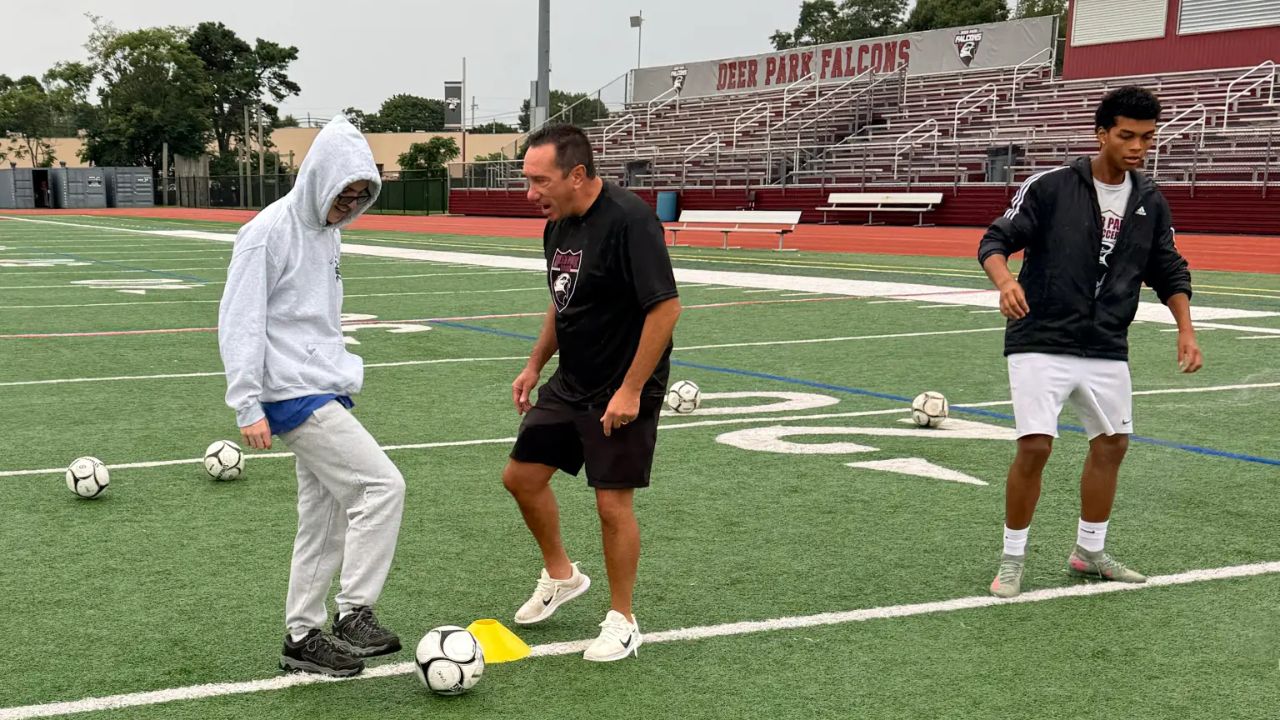
Deer Park, New York — For Frank Vertullo, soccer is about much more than goals, victories and trophies. The Queens College men’s soccer coach is bringing the sport to students with special needs in Deer Park, creating opportunities for young athletes to play, build confidence and experience the joy of being part of a team.
Vertullo launched a unified soccer program for middle school and high school students in the Long Island community, drawing inspiration from the leagues his autistic son, Michael, participated in. The initiative brings students together through soccer while encouraging teamwork, inclusion and meaningful connections.
The program is already making an impression on the students, their families and the varsity players who volunteer their time to help run the games.
How a Father’s Experience Inspired the Soccer Program
Vertullo’s decision to introduce unified soccer in Deer Park grew out of his personal experience as a father. Seeing the opportunities soccer provided for his son helped inspire him to bring a similar experience to students in the district where he also teaches life skills to special needs students.
“I said, ‘You know what, with my soccer background, let’s start it here,’” Vertullo told.
His dual role as an educator and soccer coach has helped him connect with students both inside and outside the classroom. The enthusiasm he receives from the young athletes has become one of the most rewarding aspects of the program.
“They get so excited, they see me in school, and they’re like, ‘Hi, coach! I’m so happy.’ It’s really, really awesome,” Vertullo said.
For the students, the program offers a chance to participate in an organized sport with support from people who encourage them to develop their skills and enjoy the experience.
Deer Park Varsity Players Help Make It Possible
The program also gives Deer Park varsity soccer players an opportunity to make a difference in their community.
Every Sunday morning, varsity athletes help coach and organize intramural games alongside the unified soccer participants from the middle school and high school.
Their involvement adds another dimension to the initiative. The younger athletes receive encouragement and guidance, while the varsity players learn about patience, responsibility and the value of giving their time to others.
Vertullo said he has been especially touched by the way the players interact with the students.
“They’re wonderful with the kids,” he said.
He also highlighted the personal lessons that come from participating in the program.
“It really means a lot because it takes a special person to help kids with special needs. It teaches them humility and patience, and it’s really nice that they’re giving back as well.”
The arrangement allows soccer to become a shared experience rather than simply a competition. Players and participants can build relationships, celebrate progress and enjoy being part of the same team.
Program Could Expand to More Students
Vertullo has bigger plans for the initiative. His next goal is to expand the program to include students from kindergarten through 12th grade by next year.
That expansion would give younger students an opportunity to participate while allowing the program to serve a broader range of ages and abilities.
Beyond Deer Park, Vertullo hopes to bring the concept to other school districts across Suffolk County. One proposed goal is to organize a season-ending festival and tournament that would bring participating communities together.
In the longer term, he hopes the program could receive official sanctioning from Section XI, the governing body for high school athletics in Suffolk County.
Such developments could help create a more established structure for unified soccer and open the door to participation by additional schools.
For now, the focus remains on building the program, supporting the students and making each Sunday morning a positive experience.
Families See the Difference on the Field
The impact extends beyond the players and volunteers. Parents have welcomed the opportunity to watch their children take part in a sport that emphasizes participation, connection and enjoyment.
Vertullo said families regularly express their appreciation for the program and the people who make it possible.
“They’re always so grateful and thankful,” he said.
Those reactions reflect the purpose behind the initiative: giving students a place where they can participate, feel supported and celebrate their achievements.
Vertullo has already helped create an environment where the experience of playing matters as much as the final score. With varsity athletes volunteering, school communities getting involved and plans for future expansion taking shape, the program could reach even more students in the coming years.
For these young athletes, every practice and game offers a chance to build friendships, develop confidence and feel the excitement of belonging to a team.
What do you think about schools creating more inclusive sports programs for students with special needs? Share your thoughts in the comments below.