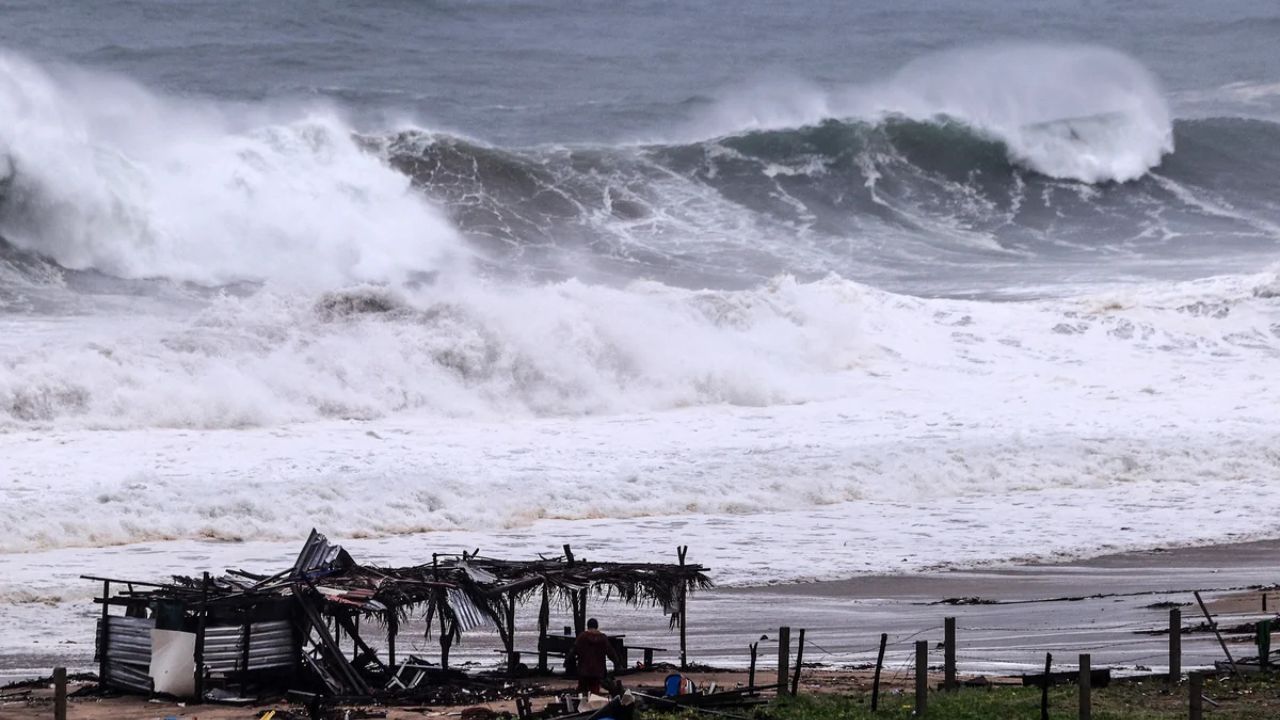
Honolulu, Hawaii — A “zombie storm” could give Hawaii its fourth tropical system of the season, with the potential to bring heavy rain and gusty winds to parts of the state after already dying out once in the Pacific.
The unusual system is currently located several hundred miles east-southeast of Hawaii and is moving west at roughly 10 to 15 mph. Forecasters are watching closely because the disturbance could regain enough organization to become a tropical depression again before potentially strengthening into a tropical storm.
If that happens, the storm would likely receive the name Nolo.
A Storm That Could Come Back to Life
The system is unusual because it has already existed as a tropical depression.
The area of interest originally developed as Tropical Depression Fifteen-E more than a week ago. However, the storm weakened as it moved westward and entered an area of strong wind shear. The shear disrupted the circulation and effectively caused the tropical depression to fall apart.
But the remnants continued moving west.
Now, the system has reached an environment with less wind shear, giving it another opportunity to organize. That second chance at development is why the storm is being described as a “zombie storm.”
The system is expected to move west-northwestward and could reorganize into a tropical depression by the end of the week.
Forecast Models Show a Tropical Storm Is Possible
Forecast models are generally indicating that the system could strengthen beyond tropical-depression status. If it becomes a tropical storm, it would likely receive the name Nolo, making it another named system to watch near Hawaii.
The biggest uncertainty comes after the initial period of strengthening.
One possible scenario has the system continuing westward before slowing considerably and eventually turning north. Under that setup, the storm could curve away from Hawaii before making landfall.
That outcome would resemble the track seen with Hurricane Lala earlier this season. However, staying offshore does not necessarily mean Hawaii would escape impacts.
Big Island Could Face the Greatest Rain Threat
Another possible scenario would bring the storm farther north, potentially putting Hawaii’s Big Island directly in its path. That would likely produce the most significant impacts, particularly if the storm strengthens while approaching the state.
The biggest concern could be rainfall.
Depending on the storm’s eventual track and intensity, some areas could potentially receive rainfall measured in feet rather than inches. The Big Island has already experienced significant rainfall from Lala earlier this year, meaning additional heavy rain could create serious flooding concerns.
A third possibility involves a dip in the jet stream moving across the islands.
If that feature arrives at the right time, it could steer the tropical system away from Hawaii sooner than expected. That would prevent or reduce the anticipated northern turn and keep the strongest impacts offshore.
Such an outcome would be similar to what happened with Tropical Storm Moke.
Hawaii Has Already Seen Three Tropical Threats
If the system develops and affects Hawaii, it could become the fourth tropical system to at least graze the state this season.
Hurricane Lala was the first major threat, with its eyewall passing close to the southern portion of the Big Island. The storm brought torrential rainfall and gusty winds, contributing to a sharp increase in power outages.
Tropical Storm Moke followed. Although it tracked farther south than Lala, its outer bands still brought rain and winds to parts of the Big Island. Flooding occurred despite the storm’s less significant overall impacts, partly because Lala had affected the region not long before.
Then came Hurricane Lowell, which became a powerful Category 5 hurricane at its peak. The storm weakened before making its closest approach to Hawaii, with its most notable impacts occurring farther west across the islands.
Why This Storm Is Being Watched So Closely
The current system is still several days away from its potential closest approach, and its eventual track remains uncertain.
A northward turn could bring significant rainfall to the Big Island, while a more southerly track could keep the worst conditions offshore. A shift in the jet stream could also push the system away from Hawaii altogether.
For now, the key question is whether the former Tropical Depression Fifteen-E can successfully reorganize.
Would you be concerned if this system takes a turn toward Hawaii? Share your thoughts in the comments and let us know which part of the state you think could see the biggest impacts.
One thought on “Hawaii Could Face Its Fourth Tropical System as a Former Depression Regains Strength”