Sacramento, California — Four varieties of Sierra Nevada Graziers grass-fed raw milk cheese have been recalled after being linked to a multi-state E. coli outbreak, federal health officials said, prompting warnings for consumers to check their refrigerators and freezers.
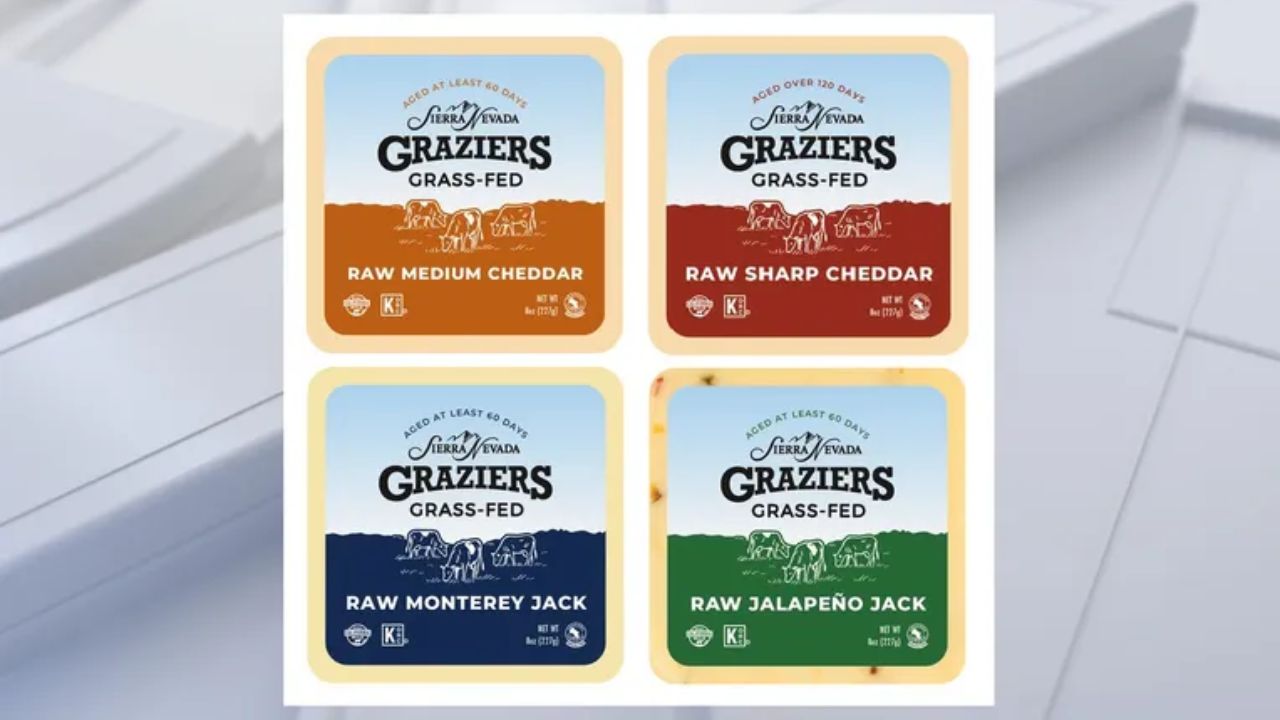
The recall affects cheeses produced by Sierra Nevada Cheese Company, including medium cheddar, sharp cheddar, jalapeño jack and Monterey jack. According to the Food and Drug Administration, the outbreak investigation has identified 13 illnesses nationwide, with at least eight people hospitalized.
The products were distributed widely and could have been purchased in stores or online across the country.
Four Cheese Varieties Included in Recall
The recalled products are sold in several sizes, meaning the warning extends beyond individual household purchases.
The affected Graziers grass-fed raw milk cheeses were sold in 8-ounce and 16-ounce packages for consumers, as well as 5-pound loaves intended for food service customers and wholesalers.
The four varieties involved are:
- Medium cheddar
- Sharp cheddar
- Jalapeño jack
- Monterey jack
Because the products have a relatively long shelf life, the FDA is urging consumers not to assume that cheese purchased weeks ago is no longer in their refrigerator.
Anyone who may have purchased one of the recalled varieties should check their refrigerator or freezer before eating or serving the cheese.
FDA Warns Consumers Not to Eat the Cheese
Federal health officials are continuing to investigate the outbreak and determine exactly how the contamination occurred. The FDA is advising consumers and businesses to not eat, serve or sell any of the recalled products.
Consumers who have the affected cheese should return it to the place where it was purchased for a full refund. The warning also applies to restaurants, food service operations and other businesses that may have received the recalled products.
The FDA said state and local health officials are continuing to interview people who became sick as investigators work to determine what foods they may have consumed before developing symptoms.
Recalled Cheese Could Still Be in Your Freezer
One reason officials are emphasizing refrigerator and freezer checks is the products’ long shelf life.
Someone who purchased the cheese some time ago may still have it stored at home without realizing that it is now part of the recall.
Consumers should avoid tasting the product to determine whether it is safe. Food contaminated with E. coli may not have an unusual smell, appearance or taste.
If recalled cheese is found, it should be handled carefully and kept away from other foods until it can be safely discarded or returned.
Clean Surfaces That Touched the Cheese
The FDA is also warning consumers and businesses about the possibility of cross-contamination.
Anyone who purchased or handled the recalled cheese should clean and sanitize surfaces, containers and other items that may have come into contact with it.
That can include refrigerator shelves, cutting boards, knives, counters, food storage containers and other kitchen equipment. Cleaning these areas is important because bacteria can potentially spread from contaminated food to other foods or surfaces.
Consumers should also wash their hands thoroughly after handling the recalled products or anything that may have come into contact with them.
FDA-Style Recall Warning: Ground Cinnamon Pulled From Stores Over Lead Concerns
E. Coli Symptoms Can Become Serious
E. coli infections can cause a range of symptoms, and they may not appear immediately after contaminated food is consumed. According to the FDA, symptoms can include severe stomach cramps, diarrhea, fever, nausea and vomiting.
Some types of E. coli can cause particularly severe illness, including bloody diarrhea and potentially life-threatening complications involving the kidneys.
Certain complications can also involve high blood pressure, neurological problems and other serious health effects.
People who develop severe symptoms after potentially consuming recalled cheese should contact a healthcare professional for guidance.
Investigation Into Outbreak Continues
Federal investigators have not yet finished determining the full scope of the outbreak. As of Friday, officials had identified 13 cases across the country, while state and local health authorities continued conducting interviews with affected individuals.
Investigators are also working to confirm the source of the contamination and determine whether additional products could be involved.
For now, the FDA’s warning remains focused on the four recalled Sierra Nevada Graziers grass-fed raw milk cheese varieties.
Have you recently purchased raw milk cheese? Check your refrigerator and freezer carefully, and share this recall information with family or friends who may have bought the affected products.