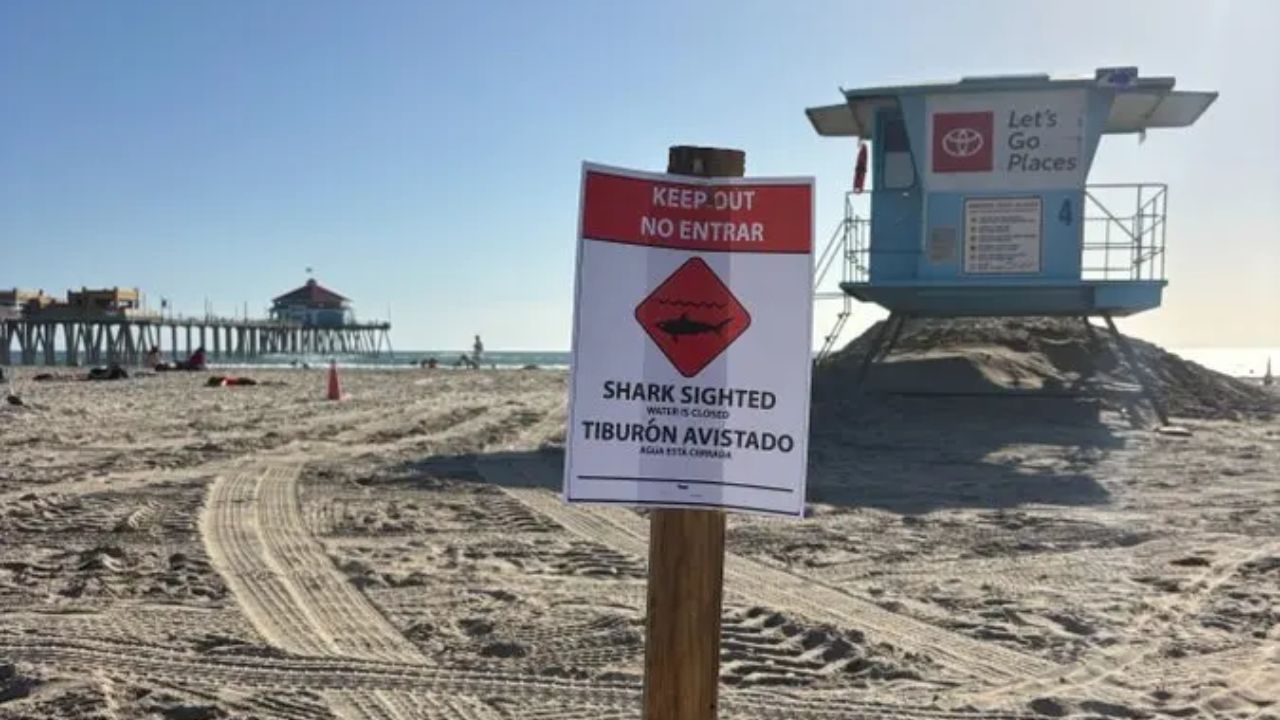
Huntington Beach, California — A massive great white shark measuring an estimated 10 to 12 feet triggered a sudden beach closure in Southern California after officials reported what they described as “aggressive behavior” near a popular stretch of coastline.
The shark was spotted near Lifeguard Tower 16 shortly before 5 p.m. Tuesday, prompting the Huntington Beach Fire Department to order beachgoers out of the water. Officials closed the beach between Seapoint Street and the Huntington Beach Pier until 3 p.m. Wednesday.
The closure was intended to keep swimmers away from the area while the reported shark activity raised safety concerns.
Great White Shark Sighting Prompts Huntington Beach Closure
The reported sighting led officials to take immediate action along a section of Huntington Beach that attracts swimmers, surfers and other ocean enthusiasts.
According to the available information, the shark was estimated to be between 10 and 12 feet long. Authorities described its behavior as “aggressive,” although officials had not released further details explaining what the shark was doing when it was spotted.
The Huntington Beach Fire Department urged beachgoers to follow safety instructions and stay clear of restricted areas.
“Please obey posted signs and lifeguard instructions,” officials warned in a post to X.
It was not immediately clear whether the same shark had been seen in the area previously or whether there had been earlier encounters involving the animal.
The reported closure covered the area from Seapoint Street to the Huntington Beach Pier, with officials setting a reopening time of 3 p.m. Wednesday.
What Beachgoers Need to Know
People visiting Huntington Beach during the closure period were advised to pay attention to posted warnings and follow directions from lifeguards.
A shark sighting does not automatically mean an attack is imminent, but officials may temporarily restrict water access when reported activity raises concerns about public safety.
Beachgoers should avoid entering closed sections of the ocean and should not assume that the water is safe simply because a shark is no longer visible.
Anyone planning to swim or surf in the area should check for updated instructions from local authorities before entering the water.
The available report did not establish whether anyone had been injured during the incident.
Unusual Marine-Life Encounters Continue Along Southern California
The Huntington Beach incident comes amid a series of unusual marine-life sightings reported along the Southern California coast.
Last month, two sea turtles were spotted nesting on Orange County beaches for the first time on record, according to the provided report. One was seen near Seal Beach, while another was spotted near the Huntington Beach Pier.
Other recent sightings included a rare hammerhead shark off Malibu, a whale shark and venomous sea snakes along the Southern California coastline.
These encounters have drawn attention to the variety of marine animals found in the region and the importance of understanding changing ocean conditions.
The report also noted unusually warm ocean temperatures associated with a powerful El Niño pattern. However, the available information does not establish that the ocean temperatures directly caused the Huntington Beach shark sighting.
Marine animals can move through coastal waters for a range of reasons, and individual sightings do not necessarily indicate a broader change in shark behavior.
Why Shark Warnings Matter for Swimmers
Great white sharks are found in California’s coastal waters, and sightings can occur in areas also used by swimmers, surfers and other beach visitors.
Temporary closures give officials time to respond to reported activity and communicate potential risks to the public. Following lifeguard instructions is particularly important when conditions change quickly or authorities have restricted access to the water.
Beachgoers should remain alert to posted warnings, avoid entering closed areas and report concerning marine-animal activity to lifeguards.
For Huntington Beach visitors, the key issue is whether local authorities have lifted the restriction and confirmed that the affected section can reopen.
The reported closure was scheduled to remain in effect until Wednesday afternoon, but visitors should verify the latest local guidance before heading into the water.
Would a great white shark sighting change your plans for a beach day? Share your thoughts in the comments, and let other beachgoers know why following lifeguard warnings matters.