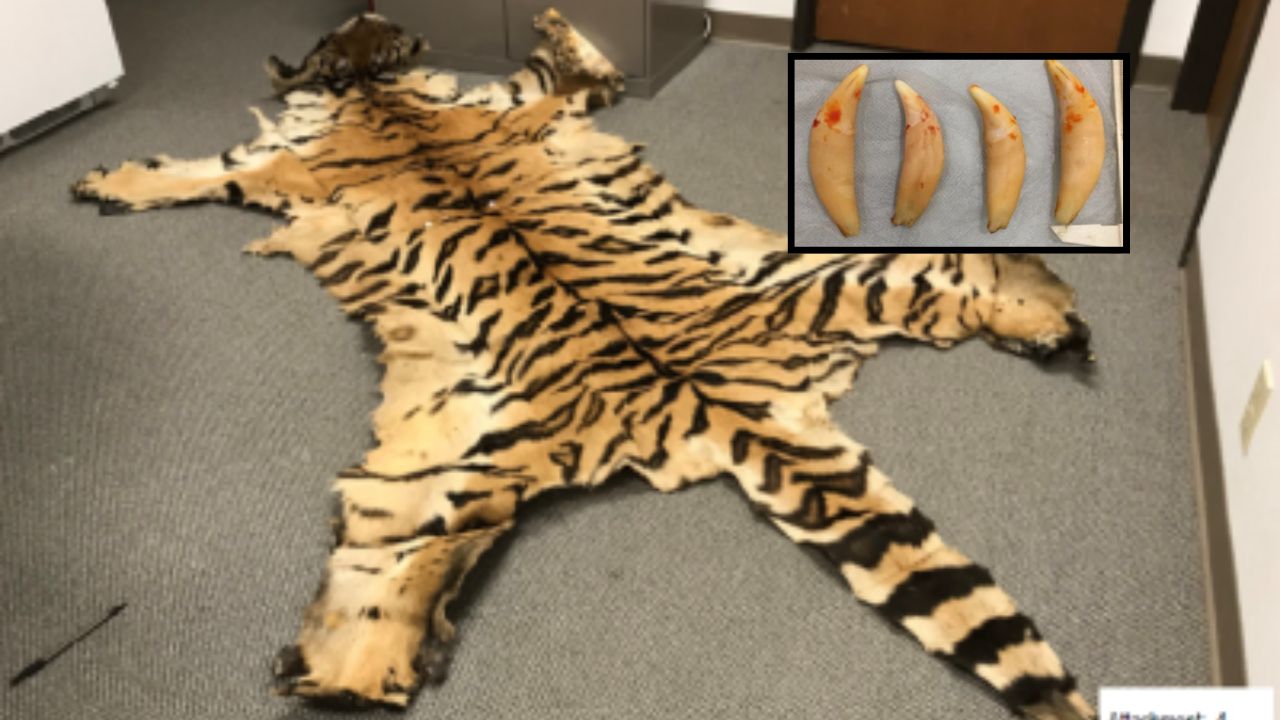
Anaheim, California — A California couple has pleaded guilty to helping facilitate an international wildlife trafficking operation that moved rhino horns, lion teeth, tiger skin and other animal parts between the United States and Vietnam, according to the U.S. Department of Justice.
Linh Luu and Kevin Le, who live in Anaheim, admitted to violating the federal Lacey Act, a law that prohibits the illegal trade and transportation of wildlife. The couple each received three years of probation and a $10,000 fine for their roles in the scheme.
Court documents describe an operation that involved payments, shipments of protected animal parts and an effort to move wildlife products across international borders. The case also highlights ongoing federal efforts to investigate illegal wildlife trafficking and the trade in parts from protected species.
How the California Couple Became Involved
According to the Justice Department, Luu and Le admitted that they processed $51,100 in payments between September 2019 and May 2021 to assist an individual in Vietnam with illegally moving wildlife items to and from Oregon.
The transactions supported an operation involving animal parts that were shipped in both directions across the Pacific.
American black bear gallbladders and cougar bones were sent to Vietnam, while lion teeth, rhino horns and a tiger pelt were brought into Oregon.
The wildlife products involved species protected by international trade restrictions, making the movement of these items subject to federal and international laws.
The couple’s guilty pleas followed a federal investigation into their role in the transactions and the handling of the wildlife products.
Undercover Agent Encounter Involved $12,000 Rhino Horn Deal
One of the key events described in the case occurred in December 2020, when Luu and Le met with an undercover federal agent.
According to prosecutors, the couple accepted $12,000 for a rhino horn during the meeting and discussed ways to avoid U.S. banking regulations.
The pair later each received approximately $5,000 for the horn parts, according to the Justice Department.
Investigators also determined that the wildlife items had been shipped to Oregon disguised as a household decoration.
Using an ordinary household item as a disguise can make suspicious shipments harder to identify during routine transportation and inspection. In this case, the details presented in court helped establish how the alleged trafficking operation moved protected wildlife products.
The couple’s guilty pleas resolved their criminal cases, and the court imposed probation and financial penalties.
What Laws Protect Rhinos, Lions and Other Wildlife?
The case involved two major legal frameworks: the federal Lacey Act and the Convention on International Trade in Endangered Species of Wild Fauna and Flora, commonly known as CITES.
Enacted in 1900, the Lacey Act prohibits certain illegal activities involving wildlife, fish and plants, including trade in specimens taken or transported in violation of applicable laws.
CITES is an international agreement designed to regulate cross-border trade in wild animals and plants and help ensure that international commerce does not threaten the survival of protected species.
Depending on the species and the circumstances, international trade in animal parts may require permits or may be prohibited altogether.
Rhino horns and products derived from other protected wildlife can be subject to strict restrictions. The legal requirements vary according to the species, the origin of the specimen and the type of transaction.
Authorities use these laws to investigate illegal imports and exports, prosecute violations and disrupt trafficking networks that profit from protected wildlife.
Other Wildlife Trafficking Cases Draw Federal Attention
The California couple’s case comes amid other investigations involving the illegal hunting and trade of wild animals.
In early October, three men pleaded guilty in a separate case involving the illegal hunting of wild bobcats and the export of their pelts to Canada, according to the Justice Department.
Prosecutors said the men used bait to lure and kill the animals before transporting the pelts to New York, where they were falsely tagged and prepared for export to Canada.
In another case, a woman was arrested at the U.S.-Mexico border in August after authorities allegedly discovered 69 live animals inside her vehicle. The animals reportedly included venomous vipers, caimans and a baby crocodile, with some allegedly concealed in pillowcases sealed with tape.
These cases involve different alleged activities, but each illustrates the range of challenges faced by authorities investigating wildlife trafficking, from illegal hunting and false labeling to the movement of live animals across borders.
Why the Case Matters
Illegal wildlife trafficking can place additional pressure on vulnerable animal populations and create opportunities for criminal networks to profit from protected species.
Investigations often require cooperation among federal agencies, wildlife authorities and international partners because the animals, transactions and shipments may involve several countries.
The Luu and Le case demonstrates how financial transactions and concealed shipments can become central evidence in investigations into international wildlife trade.
With both defendants having pleaded guilty and received probation and fines, the case also underscores the potential legal consequences of facilitating prohibited wildlife transactions.
What measures do you think would help authorities stop illegal wildlife trafficking across international borders? Share your thoughts in the comments below.