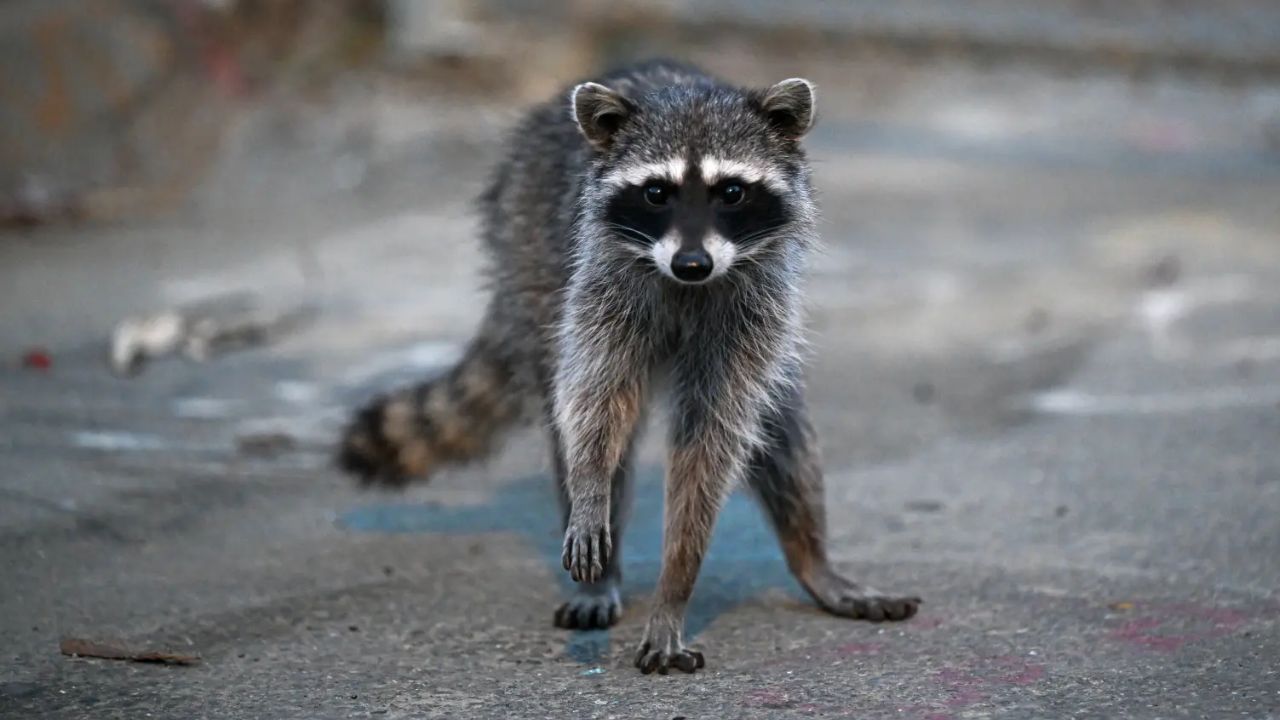
Westlake Village, California — Los Angeles County health officials are warning residents to avoid contact with wild animals after a rabies-positive raccoon was found in a Southern California backyard, marking the county’s first reported rabid raccoon case in more than 50 years.
The raccoon entered the backyard of a home in Westlake Village and appeared to be sick, although officials said it did not display aggressive behavior toward people. Testing later confirmed that the animal was infected with rabies, prompting an investigation and a public health warning.
A dog that was exposed to the raccoon had an updated rabies vaccination and was placed under quarantine. Officials said the dog was doing well.
Four People May Have Been Exposed
Health officials are also following up with four people at a nearby worksite who may have been exposed to the infected raccoon.
Those individuals were receiving “recommended follow-up for rabies post-exposure prophylaxis,” according to Los Angeles County health officials.
Rabies is a viral disease that attacks the brain and nervous system. Once symptoms begin, the disease is considered almost always fatal, making prompt medical attention following a potential exposure extremely important.
Officials said the specific rabies variant carried by the raccoon has not yet been identified.
The investigation is continuing, and health officials believe the animal may have been infected by a bat. Additional variant testing is expected to take several weeks.
Health Officials Warn Residents Not to Handle Wildlife
Los Angeles County Health Officer Muntu Davis urged residents to avoid interacting with wild animals, even when the animals do not initially appear dangerous.
“The detection of rabies in a raccoon is an important reminder to never touch, handle or feed any wild animals, even when they appear healthy,” Davis said.
“Always keep a safe distance from wildlife and contact your local animal control if you encounter an animal that appears sick, injured or is behaving unusually.”
The warning comes as Los Angeles County continues to see rabies activity involving bats.
First Rabid Raccoon Reported Since 1973
The last reported rabies-positive raccoon in Los Angeles County was recorded in 1973, making the latest discovery particularly unusual.
Historically, rabies cases in the county have been associated primarily with infected bats. Officials have also reported an increase in positive bat cases in recent years.
In 2026, Los Angeles County has recorded a record 70 rabid bat cases, and officials warned that the peak season for bat activity has not yet arrived.
Rabid bats have been found across the county, including in both suburban and urban environments.
“Rabid bats have been found in every part of Los Angeles County, from suburban areas such as the San Fernando Valley to urban areas like downtown Los Angeles, in office buildings, parks, schools, businesses and residential backyards,” the county said.
Bat Encounters Can Happen Inside Homes
Health officials are particularly warning residents not to assume that wildlife exposure only happens outdoors.
Winter Haven High School Student Among 2 Killed in School Bus Crash as 39 People Were on Board
“One-third of bat encounters occur indoors, where exposure risk is higher,” the county said.
Residents are being urged to never touch a bat or other wild animal, even if it appears injured or unable to move. Pet owners are also being encouraged to make sure their animals are up to date on rabies vaccinations.
Rabies is primarily spread through the saliva of infected animals, most commonly through bites. Exposure can also occur when infected saliva comes into contact with the eyes, mouth or an open wound.
What to Do After a Possible Rabies Exposure
Anyone bitten by a wild animal should seek medical attention immediately and report the incident to the appropriate public health agency.
Symptoms of rabies can include fever, confusion, agitation and difficulty swallowing. Once symptoms appear, the disease is almost always fatal, but rabies can be prevented when appropriate post-exposure treatment is given promptly.
Pet owners should also act quickly if their animal is bitten or exposed to wildlife. Authorities recommend taking an exposed pet to a veterinarian immediately and reporting the incident to local animal control.
For Los Angeles County residents, the discovery of the rabid raccoon serves as a reminder that potentially infected wildlife can appear in backyards, neighborhoods and other areas where people and pets spend time.
Have you ever encountered a wild animal behaving unusually in your neighborhood? Share your experience in the comments and let others know what precautions you take around wildlife.