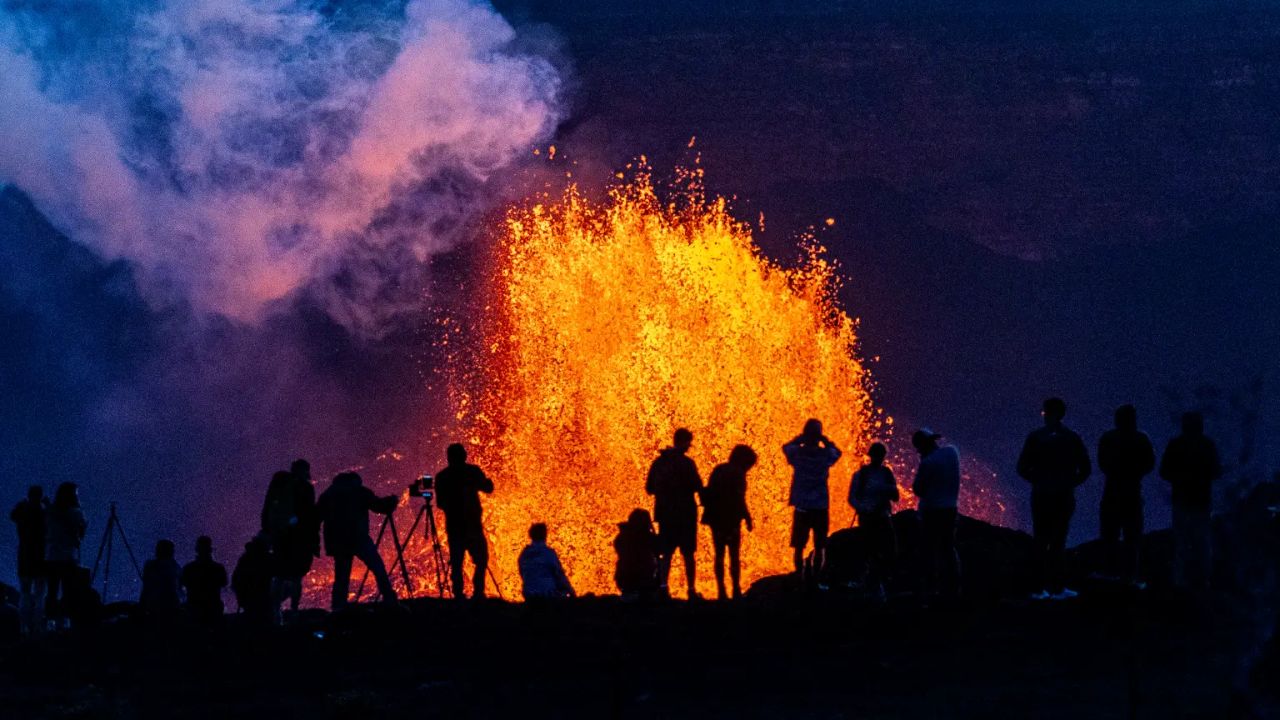
Hawaii Volcanoes National Park, Hawaii — Renewed volcanic activity and more than 200 shallow earthquakes have prompted temporary trail closures at one of Hawaii’s most popular tourist destinations, as officials warn visitors about falling rocks, unstable cliffs and potentially hazardous volcanic material.
The National Park Service (NPS) announced Wednesday that Halemaʻumaʻu Trail and part of Byron Ledge Trail would temporarily close because of increased seismic activity near Kīlauea’s summit. The closures affect a combined 1.3 miles of trails inside Hawaiʻi Volcanoes National Park.
The US Geological Survey (USGS) has also reported renewed spattering at two vents following recent activity beneath the summit, keeping attention focused on one of the world’s most active volcanoes.
Hundreds of Earthquakes Raise Safety Concerns
According to the National Park Service, more than 200 shallow earthquakes were recorded beneath Kīlauea’s summit during the past week, citing observations from the Hawaiian Volcano Observatory.
A magnitude-3.4 earthquake on September 30 also triggered small rockfalls along the northern wall of the volcano’s caldera.
Although earthquakes of this size may not cause widespread damage, seismic activity near steep volcanic terrain can create additional hazards for people exploring nearby trails.
Scientists believe an underground intrusion that occurred between September 30 and October 1 may have produced new cracks along the caldera floor. These changes have complicated efforts to predict the volcano’s next phase of activity.
For park officials, the immediate priority is protecting visitors from falling rocks and potentially unstable ground while scientists continue monitoring conditions.
Kīlauea Remains Under an Elevated Aviation Alert
Kīlauea remained at an ORANGE aviation color code as of Thursday, the second-highest level on the USGS four-tier aviation alert scale.
The designation indicates heightened volcanic activity and the potential for an eruption, or an eruption underway with limited hazards to aviation.
However, the alert does not mean that every part of the national park faces the same level of danger. Local conditions can change quickly, making it important for visitors to follow park closures and official instructions.
Scientists have also cautioned that they cannot currently determine when—or whether—the volcano’s 55th episode of lava fountaining will occur.
The USGS advisory stated:
“Forecast windows for episode 55 fountaining can no longer be modeled due to changes in conditions,”
That uncertainty means visitors should not assume that another spectacular lava display is imminent simply because volcanic activity has increased.
Officials Warn About Volcanic Fragments and Dangerous Cliffs
The earthquake activity and recent eruptive episodes have prompted additional warnings for residents and tourists.
Officials say small, glassy volcanic fragments may become airborne or be redistributed during windy conditions. These particles can irritate the skin and eyes, particularly for people spending extended periods outdoors.
The USGS advisory warned:
“Small glassy volcanic fragments may be remobilized during windy conditions following recent eruptive episodes.”
Hurricane Isaias Is Headed Inland—Here Are the Cities Facing Heavy Rain, Strong Winds and Flooding
It also urged caution, stating:
“Residents and visitors should minimize exposure to these fragments, which can cause skin and eye irritation.”
Visitors are being told to stay out of closed areas and keep away from unstable cliff edges, which can collapse without warning.
Anyone planning a visit should check current park conditions before setting out and follow posted restrictions. A trail that was accessible earlier in the week may no longer be safe if seismic activity or ground conditions change.
Kīlauea’s Eruptions Continue to Draw Tourists
Despite the hazards, Kīlauea remains a major attraction for visitors traveling to Hawaii.
The USGS says the volcano has erupted dozens of times since 1952. Its East Rift Zone experienced nearly continuous eruptive activity from 1983 to 2018, a period that ended amid significant volcanic activity and a collapse at the summit.
Since December 2024, an eruption has been intermittently active within Halemaʻumaʻu crater at the summit.
The National Park Service has previously reported increased visitation during eruptive episodes, as tourists travel to see the dramatic volcanic landscape and, when conditions permit, observe lava activity from designated viewing areas.
Hawaiʻi Volcanoes National Park recorded more than 1.8 million recreational visits in 2025, according to NPS data, highlighting the destination’s popularity.
What Visitors Should Know Before Traveling
The temporary trail closures do not necessarily mean the entire national park is closed. However, access to specific areas can change as scientists and park officials assess new developments.
Visitors should respect barriers, avoid restricted trails and remain alert to official safety announcements. Volcanic gases, unstable terrain, falling rocks and airborne fragments can present risks even when lava is not visible.
For travelers hoping to see Kīlauea during an upcoming Hawaii vacation, safety restrictions should take priority over reaching a particular viewpoint. Conditions may evolve before or during a visit, and forecasts cannot guarantee when the next episode of lava fountaining might occur.
Would you still visit Hawaii Volcanoes National Park while Kīlauea is showing renewed activity, or would you wait until conditions settle? Share your thoughts in the comments.