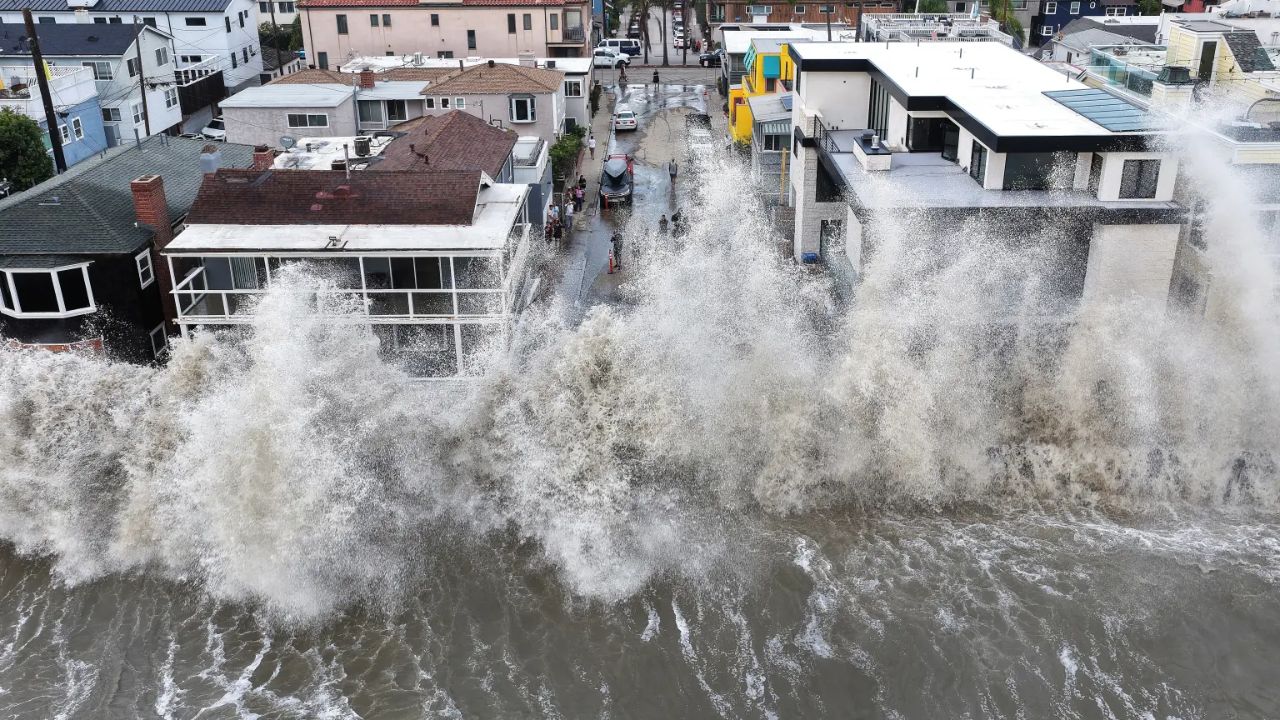
Malibu, California — A massive surge of ocean water is building along the California coast, with sea levels potentially rising by as much as a foot in the coming days and increasing the threat of coastal flooding and erosion.
The phenomenon, known as a “coastal trapped wave” or “Kelvin wave,” is associated with El Niño and has been building along the California coastline in recent weeks. Unlike a typical ocean wave that rises and falls within minutes, this phenomenon involves a broad and sustained bulge of water that can elevate sea levels across a large stretch of coastline.
The developing surge could affect an area extending roughly 12 to 18 miles offshore, creating additional pressure on beaches and coastal communities already dealing with storm activity and erosion.
What Is a Coastal Trapped Wave?
A Kelvin wave is not a conventional breaking wave.
Instead, it is a large-scale movement of ocean water that can temporarily raise sea levels along the coast. The phenomenon can travel across the Pacific and become concentrated along coastlines, where the elevated water can remain for an extended period.
The current wave is connected to the ongoing El Niño pattern, which has already contributed to unusually warm ocean temperatures across parts of the Pacific.
That combination is particularly important for California because even a relatively modest increase in background sea level can make coastal flooding more likely during storms, high tides and large surf.
California Beaches Already Face Erosion
The potential surge arrives at a difficult time for California’s coastline.
Coastal communities have already experienced powerful waves, storms and significant beach erosion in recent weeks. In Malibu, large waves previously pushed onto the Pacific Coast Highway, highlighting how vulnerable some coastal areas can become when high surf combines with elevated ocean levels.
Adding another foot of water to already elevated conditions could allow waves to reach farther inland and increase the potential for flooding and erosion.
Oceanographer Dillon Amaya of North Carolina State University told AFP:
“The general rule of thumb is that every two to four inches of sea level rise that we see in that background state essentially doubles your flood risk,”
That means the impact of the surge could extend beyond simply putting more water on beaches. Elevated baseline sea levels can give incoming waves and storm surge a higher starting point.
California Could Approach Record Sea Levels
The unusual combination of conditions is raising concern among scientists watching the Southern California coastline.
Mark Merrifield, director of the Center for Climate Change Impacts and Adaptation at the Scripps Institution of Oceanography in La Jolla, told the New York Times that California could potentially experience its highest sea levels ever recorded if the various factors come together.
That possibility depends on how the Kelvin wave interacts with tides, weather systems, surf and other ocean conditions.
The concern is particularly significant because several Southern California beaches are already experiencing erosion and recovering from recent extreme weather events.
El Niño Is Helping Drive the Ocean Changes
The Kelvin wave is closely connected to the same ocean-atmosphere pattern behind El Niño.
As the massive bulge of water moves across the Pacific, it can suppress the colder water that normally rises from deeper parts of the ocean. That process contributes to warmer surface waters, which are one of the defining characteristics of El Niño.
Dillon Amaya described the Kelvin wave as both a cause and a symptom of El Niño, illustrating how closely the ocean phenomenon and the broader climate pattern are connected.
Sea temperatures along the California coast are already elevated, adding another factor to the situation.
Coastal Flooding Risk Could Increase
For California residents, the biggest concern is not simply the unusual appearance of a large ocean bulge. The greater issue is how the elevated sea levels interact with storms, tides and coastal waves.
Higher background water levels can allow waves to travel farther onto beaches and increase erosion of already weakened shorelines.
Low-lying coastal areas could therefore face greater flooding concerns if another strong storm arrives while the Kelvin wave remains in place.
The exact magnitude and duration of the sea-level increase will depend on how the ocean pattern develops over the coming days.
For now, California’s coastline remains under close observation as scientists track the unusual combination of El Niño, elevated sea temperatures, coastal erosion and the incoming Kelvin wave.
What do you think about this unusual ocean phenomenon developing along California’s coast? Could rising sea levels make the next round of storms even more dangerous? Share your thoughts in the comments.