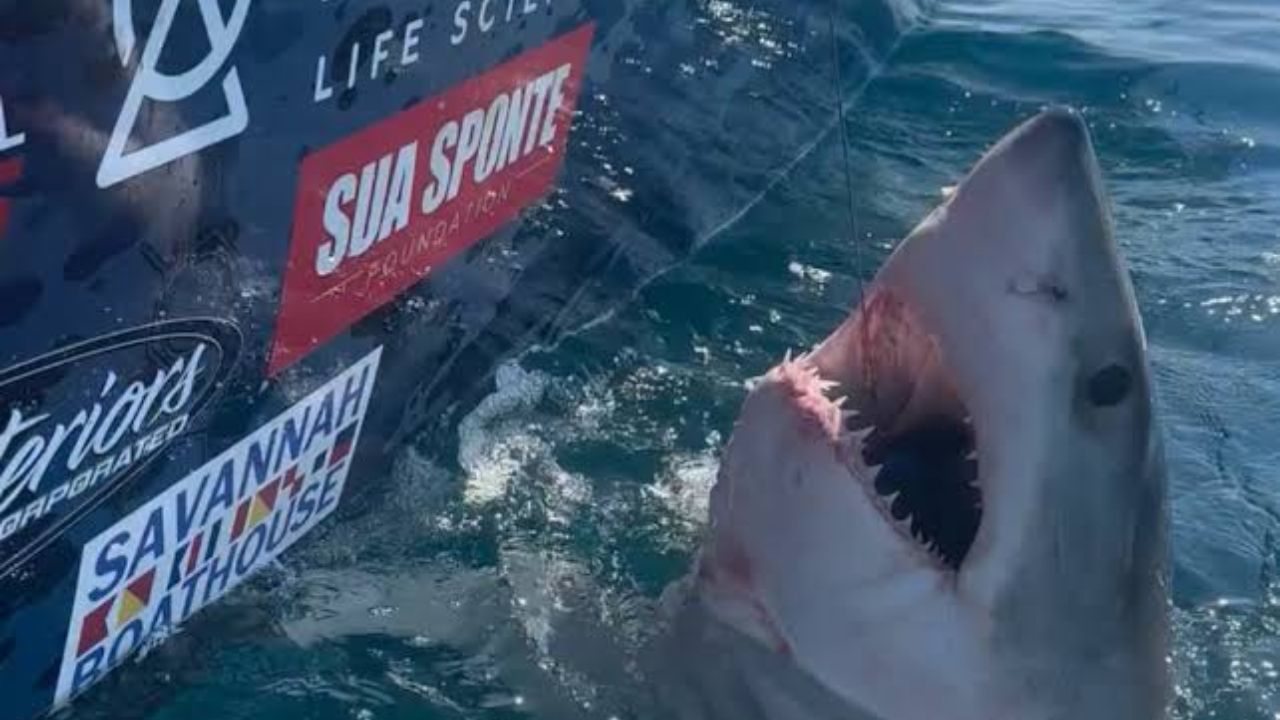
Savannah, Georgia — A woman had a frighteningly close encounter with a great white shark after reaching out to touch the marine predator from a fishing boat, prompting the animal to thrash around and lunge in her direction.
The encounter was captured on video during a shark research and tagging trip associated with Knot Lucky Fishing and its White Shark Tagging Program. The footage shows the tense moment as the woman, identified as Jen, reaches toward the shark before it suddenly moves.
According to Jimmy Armel, founder of Knot Lucky Fishing, the crew had the situation under control and the woman was never in any real danger. However, the shark’s sudden reaction left everyone aboard startled.
Great White Shark Suddenly Lunges Toward Woman
The incident unfolded when Jen, described by the organization as one of its veterans, reached out to touch the wild shark. What appeared to be a brief interaction quickly became more intense when the animal whipped around and lunged toward her.
In a Facebook post describing the encounter, the organization wrote:
“One second Jen, one of our veterans, is laying her hand on a wild white shark like it’s the family dog, and the next second that shark whips around and lunges toward her,” the organization said in a Facebook post. “Everybody on the boat felt that one in their chest.”
The description captured the sudden change from an apparently calm moment to a potentially dangerous encounter with one of the ocean’s most powerful predators.
Although the crew reportedly maintained control of the situation, the incident highlights how quickly a close interaction with a large wild animal can change.
Great white sharks are powerful predators, and even movements that appear defensive or unexpected can pose serious risks to people nearby. Reaching toward a shark is not considered a safe way to interact with the animal.
Why Was the Shark Near the Fishing Boat?
The encounter took place as part of a shark research initiative involving Knot Lucky Fishing and its White Shark Tagging Program, which works with Starbrite, Project SeaSafe and Gray FishTag Research.
The program operates off Tybee Island, along the Georgia coast, where its team works to catch, tag and release great white sharks for research purposes.
The tagging effort is designed to collect information about shark movements and migration patterns. Researchers can use tagging data to better understand where these animals travel and how their movements change over time.
According to Armel, the team also gives each shark a name honoring a fallen Army Ranger or other service member.
“We name each one after a fallen Ranger or service member, collecting real migration data while keeping our brothers’ names alive,” Armel told.
Armel said the team had tagged 10 great white sharks so far and expected more to return to the Tybee Island area during the winter.
Why the Shark Was Not Tagged
Despite the close encounter, the shark shown in the video was not tagged during that trip.
According to the report, safety concerns involving both the crew and the shark prevented the team from proceeding with the tagging process.
Tagging a large wild shark requires careful handling and coordination. If conditions become unsafe or the animal’s movements create additional risks, researchers may need to abandon the attempt.
The decision not to tag the shark underscores the importance of prioritizing safety during wildlife research, even when a team has experience working with large marine animals.
9-Year-Old Hurt by Falling Dumbbell as Florida Deputies Find 4 Kids Home Alone, Mother Arrested
The organization has not provided further details about the shark’s condition following the encounter.
Fishing Trips Support Veterans and Their Families
Knot Lucky Fishing is based in Savannah, Georgia, and offers free fishing trips to veterans, active-duty service members and their families.
Its work combines recreational fishing opportunities with marine research initiatives, including efforts to track great white sharks off the Georgia coast.
For participants, these trips can provide an opportunity to spend time on the water while supporting research into marine wildlife. The shark tagging program also connects the organization’s work with efforts to honor fallen service members.
The encounter with Jen brought an unexpected moment of tension to one of these trips, demonstrating the unpredictable nature of working around large wild animals.
A Reminder About the Risks of Approaching Sharks
Great white sharks are wild animals, and their behavior can be difficult to predict, even when experienced crews are nearby.
The crew’s reported control of the situation does not mean reaching toward a shark is safe. A sudden turn, tail movement or lunge can cause serious injuries when a person is close enough to touch the animal.
The video serves as a reminder that wildlife encounters can change in seconds and that keeping a safe distance is essential.
As the White Shark Tagging Program continues its research off Tybee Island, its work is expected to provide more information about great white shark migration along the Georgia coast.
Would you ever get close enough to touch a great white shark, even with an experienced crew nearby? Share your thoughts in the comments below.