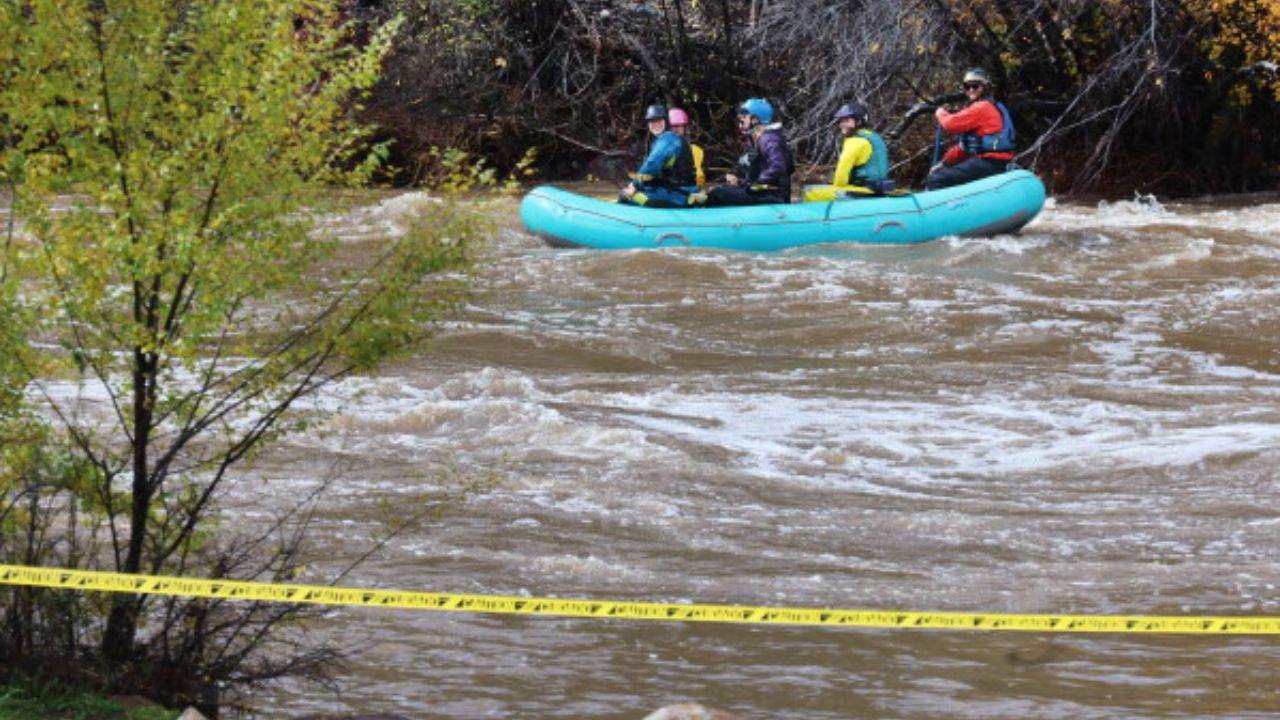
Farmington, New Mexico — Hundreds of homes remained under evacuation orders and without electricity Saturday after days of heavy rainfall triggered severe flooding across the Four Corners region, sending powerful surges of water from Colorado’s mountains into communities in New Mexico and Arizona.
Although the San Juan River and several other waterways had begun receding from record levels, additional storms continued to move through the region. Local officials warned that renewed rainfall could cause more flooding, leaving residents uncertain about when they could safely return home.
“This is not over, and we need you to monitor alerts,” Farmington Police Chief Steve Hebbe said during a news conference.
Flooding Affects Thousands Across the Four Corners Region
The flooding affected approximately 2,000 people in and around Farmington, a city of about 46,000 residents in northwestern New Mexico near the Four Corners, where Arizona, Colorado, New Mexico and Utah meet.
Heavy rainfall began intensifying Wednesday, with some locations receiving more than 5 inches of rain. Flooding peaked Thursday and Friday as water rushed downstream from the Colorado mountains into lower-lying communities.
At least several hundred people required rescue during the emergency, although officials said the number was difficult to track accurately because of the scale of the response.
Some residents became stranded on rooftops as floodwaters surrounded their homes. Rescue teams worked to reach people trapped by rapidly rising water, while emergency personnel coordinated evacuations and monitored dangerous conditions.
New Mexico National Guard helicopters carried out 11 hoist rescue operations, according to San Juan County spokesperson Devin Neeley. Each helicopter operation could transport as many as eight people to safety.
Despite the number of people displaced, emergency shelters were not full. Officials suspected that many evacuees had found temporary accommodation with relatives and friends.
Evacuation Orders Remain in Place Despite Falling Water Levels
Even as river levels declined, officials continued to restrict access to affected neighborhoods and properties.
Authorities warned that receding floodwaters did not automatically mean conditions were safe. Downed power lines, potentially leaking gas lines and the threat of additional storms remained major concerns.
San Juan County Sheriff Shane Ferrari acknowledged the frustration facing residents who wanted to inspect their homes and belongings.
“There’s a lot of anxiety, and there’s a lot of frustration,” Ferrari said. “But please understand we are blocking those areas for your safety.”
Officials urged residents to follow evacuation instructions and wait until authorities confirmed that returning was safe.
People were also warned against using drones to inspect their properties or watch the flooding. Emergency officials in Colorado and New Mexico said drone activity could interfere with rescue aircraft and put responders at risk.
Authorities also asked residents to reserve 911 calls for genuine emergencies so dispatchers could prioritize people facing immediate danger.
San Juan River Flooding Closes Roads Near Shiprock
The flooding extended beyond Farmington into the Navajo Nation, where the San Juan River inundated parts of the surrounding area.
A roughly two-mile stretch of U.S. Highway 64 west of Shiprock was closed because floodwater covered the roadway.
Road closures created additional challenges for residents and travelers, particularly in communities where rising rivers and damaged infrastructure limited access.
Drivers were urged to follow official road closure information rather than attempting to cross flooded routes. Even when water appears shallow, moving floodwater can sweep vehicles away or conceal damaged pavement.
Colorado Rivers Swell as Flooding Spreads
Upstream in Colorado, the San Juan River surged through Pagosa Springs, a mountain resort town known for its hot springs. The river’s level reached heights not seen in more than a century, according to the reported measurements.
Floodwaters rose more than two feet above the level recorded during a flood just over a year earlier that officials had considered a 100-year event.
The Animas River also rushed through Durango, a popular tourist destination in southwestern Colorado. Although the river remained below historical records dating back more than a century, the muddy torrent highlighted the severity of the regional flooding.
Flood impacts extended farther east to the Conejos River in south-central Colorado. Gov. Jared Polis added Conejos County to the list of areas eligible for disaster assistance.
Several roads remained closed, including portions of U.S. 160 northeast of Pagosa Springs. However, the well-known Million Dollar Highway, officially designated U.S. 550, reopened between Durango and Ouray after crews addressed water damage.
More Rain Could Bring Renewed Flooding
The latest emergency follows roughly two months of intermittent heavy rainfall associated with tropical moisture moving inland from the Pacific.
The rainfall arrived after an extended period of drought, creating difficult conditions across a region where rocky desert terrain is naturally vulnerable to flash flooding.
When heavy rain falls on saturated ground, less water can soak into the soil. Instead, runoff can move quickly into streams, rivers and drainage channels, increasing the potential for sudden flooding.
Recent deadly flooding in the Grand Canyon and other parts of New Mexico has also underscored the dangers posed by intense rainfall across the Southwest.
What Residents Should Watch Next
Although water levels were falling in several locations, officials continued to warn that the situation could change if additional storms developed.
Residents under evacuation orders should monitor local emergency alerts, avoid flooded roads and stay away from downed power lines. People should not return to restricted neighborhoods until authorities confirm that conditions are safe.
The coming weather could determine whether river levels continue to decline or rise again, prolonging disruptions for families, businesses and emergency crews across the region.
Are you or your family affected by the Four Corners flooding? Share your local conditions and any road closures or evacuation updates in the comments below.