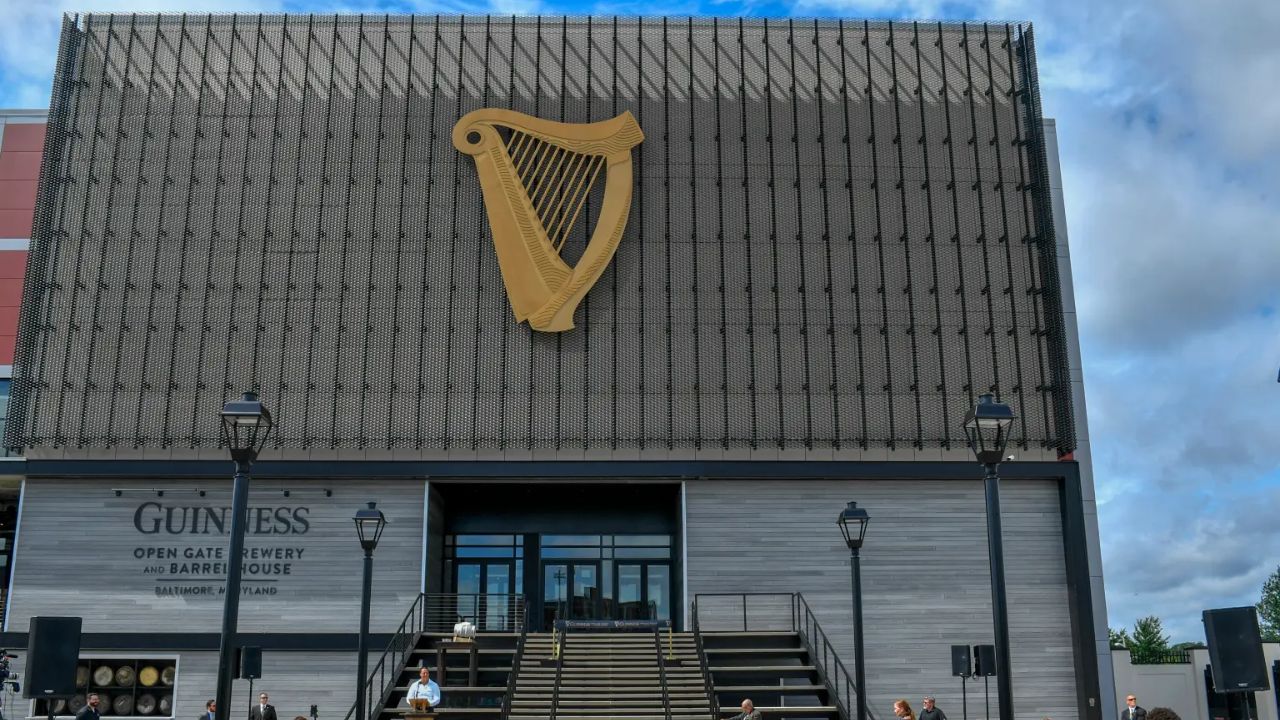
Halethorpe, Maryland — A popular Guinness brewery outside Baltimore is preparing to close its doors permanently, ending a chapter that brought more than 2 million visitors through its doors since 2018.
The Guinness Open Gate Brewery in Halethorpe will welcome the public for the final time on November 1, according to a notice filed with the Maryland Department of Labor on October 1. The closure is expected to leave 174 Aramark employees out of work, marking a significant change for the brewery and the surrounding community.
The decision comes as Diageo, the parent company of Guinness, moves forward with a $1 billion restructuring plan aimed at reshaping its operations and long-term business priorities.
Guinness Brewery Closure Marks the End of an Era
The Maryland brewery opened in 2018, becoming the first U.S. brewery operated by the Irish beer brand since its previous American brewery in New York closed in 1954.
Since opening, the Guinness Open Gate Brewery has attracted beer enthusiasts, tourists and local visitors interested in its brewing operations, experimental beers and visitor experiences.
According to a post on the brewery’s Facebook page, the location welcomed more than 2 million visitors over the years. Its closure will leave Guinness’ Chicago brewery as the brand’s only remaining U.S. brewery location.
For Baltimore-area visitors, the shutdown means the end of a destination that combined the internationally recognized Guinness name with locally produced and experimental beer offerings.
Why Is Guinness Closing Its Maryland Brewery?
Diageo said the decision followed a review of its operations and long-term priorities.
“This decision follows a careful review of our operations and long-term business priorities,” a company spokesperson told.
The spokesperson also emphasized that the closure should not be viewed as a reflection of the brewery team’s work or the support it received from the community.
“It is not a reflection of the passion, talent or dedication of our team, nor of the support we have received from consumers and the Baltimore community since we opened our doors in 2018.”
The closure comes during a broader restructuring effort at Diageo. According to the reports in July, some teams within the company were losing between 20% and 30% of their staff.
The brewery shutdown is therefore taking place amid wider organizational changes, although the company has not attributed every aspect of its restructuring to a single cause.
More Than 700 Experimental Beers Created at the Brewery
One of the Maryland location’s distinctive features was its focus on experimentation.
The brewery gave guests opportunities to explore different beer styles and create their own brews. According to its Facebook post, more than 700 beers were created through its experimental program over the years. However, industry observers have questioned whether experimental offerings were enough to sustain the location over the long term.
An industry expert quoted in the original report suggested that Guinness’ core products remain its traditional stout and Guinness Zero, its non-alcoholic alternative. Experimental beers may attract interest, but they do not necessarily drive the brand’s primary business.
The distinction highlights the challenge of operating a brewery that serves both as a visitor attraction and as a place to develop new products.
Changing Drinking Habits May Also Play a Role
Shifting consumer behavior could be another factor affecting brewery and alcohol businesses.
New research cited in the original report indicates that U.S. alcohol consumption has declined after the increases associated with the COVID-19 pandemic.
Another emerging trend is known as “zebra striping,” in which people alternate between alcoholic and non-alcoholic drinks during the same occasion.
The trend reflects changing preferences among consumers who want more flexibility in how much alcohol they consume.
Although these developments provide context for the industry’s challenges, Diageo has not publicly identified changing drinking habits as the sole reason for closing the Maryland brewery.
Nature’s Own Bread Recall Issued After Undeclared Ingredient Could Trigger Allergic Reactions
What Happens to the Employees and Guinness Brand?
The closure is expected to affect 174 Aramark employees, according to the labor department notice. Diageo said its immediate priority is helping affected workers navigate the transition.
“Our immediate focus is supporting affected colleagues through this transition,” a company spokesperson said. The company also pledged to provide resources and assistance to employees affected by the decision.
Despite the Maryland closure, Diageo stressed that Guinness remains a major part of its business and that it intends to continue investing in the brand’s future.
The company said its commitment to bringing Guinness to consumers around the world remains strong.
For visitors who have enjoyed the Halethorpe brewery since 2018, however, November 1 will mark the end of the Maryland location’s run. Its closure brings an end to a venue that welcomed millions of people and introduced hundreds of experimental beers while the Guinness brand continued to evolve in the United States.
Have you ever visited the Guinness Open Gate Brewery in Maryland, or was it on your travel list? Share your thoughts in the comments below.